SARSILMAZ SAR-762-MT HEAVY MACHINE GUN
Origin Turkey
Designer is SARSILMAZ
Designed in 2021
Manufacturer is MKEK, Sarsılmaz Arms
Produced in 2021-present
Specifications
Weight: 12 kg (26.4 lb) without magazine
Length: 1200 mm (47,24 in)
Barrel length: 547 mm (21,53 in)
Cartridge: 7.62×51mm NATO
Action: Gas-operated, open position
Rate of fire: 1st set 600 rounds/min
2nd set 800 rounds/min
3rd set 1100 rounds/min
Muzzle velocity: 850 m/s (2,788 ft/s)
Effective firing range: 600 m (660 yd)
Sights: Iron sights or various optics
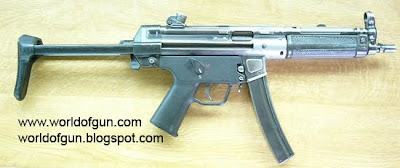
MKEK MPT-55/ MPT-55K
Origin Turkey
Operating Principle: Short stroke, Gas Operated, Rotating Bolt
Calibre: 5.56x45mm NATO
Barrel Length: 279.4 mm / 368.5 mm
Length (Closed Butt): 730 mm / 800 mm
Weight: 3000 g / 3300 g (without magazine)
Type of Fire: Semi - Full Automatic
Accuracy: 4 MOA
Number of Grooves: 6
Rate of Fire: 800 rds/min
Muzzle Velocity: 800 m/s / 850 m/s
Effective Range (sound): 400 m
Trigger Force: 20-30 Newton
Magazine Capacity: 30
Buttstock: Telescobic, 84 mm, 7 Stages
MKEK MPT-76 ASSAULT RIFLE
Origin Turkey
Designer is MKEK
Designed in 2009
Manufacturer is MKEK, Sarsılmaz Arms, Kalekalıp
Produced in 2014-present
Specifications
Weight: 4.1 kg (9.0 lb)
Length: 920 mm (36 in)
Barrel length: 406 mm (16.0 in)
Cartridge: 7.62×51mm NATO
Action: Gas-operated, rotating bolt
Rate of fire: 700 rounds/min
Muzzle velocity: 800 m/s (2,600 ft/s)
Effective firing range: 600 m (660 yd)
Feed system: 20 or 30-round detachable magazine
Sights: Iron sights or various optics
The MPT (stands for Turkish: Millî Piyade Tüfeği, English: National Infantry Rifle) is a modular rifle family designed by MKEK and produced by MKEK, Sarsılmaz Arms and Kalekalıp to meet the demands of the Turkish Armed Forces and to replace its aging rifles such as Heckler & Koch G3 and Heckler & Koch HK33 due to most of them being near the end of their service life. The MPT was designed for robust high altitude, all weather combat, capable of functioning in extreme hot and cold weather. The MKEK MPT is a rifle intended to take abuse and extreme mistreatment and still maintain high accuracy and reliability in order to survive in true battle environments. The Turkish government has invested US$22 million into the project. It made its first public appearance at the Eurosatory 2014, ADEX 2014 and the MSPO 2014 events.
What do you get when you cross a car wash spray nozzle with a Thompson submachine gun? No, it's not a joke. It's a new and rather unconventional .45-caliber (.45 ACP) subgun that attenuates/mitigates felt recoil and muzzle rise/climb--thus increasing controllability--on full-auto by putting the bore axis at or slightly below the centerline of the shooter's fist and forearm and combining that ergonomic aspect with a mechanical recoil attenuation/mitigation system. It's called the KRISS Super V Sub-machine gun, and it's brought to you by the good folks at Transformational Defense Industries (TDI), headquartered in Washington, D.C. That's more than a little ironic. Think about it--a select-fire (full-auto capable) small arm being developed in D.C., one of the most anti-legal-firearms-ownership/anti-Second Amendment cities in the country. Most likely, TDI's manufacturing facility is located outside the District (in an actual state, somewhere), and it would seem logical that their testing facility would be located somewhere in Virginia. We'll look into it.
TDI claims that in addition to reducing felt recoil and muzzle rise on full-auto, the KRISS's unique design...
reduces weapon weight by as much as 50%. The total number of parts (including moving parts) is supposed to also be lower, but DefRev doesn't have a parts count, yet. According to the company, the KRISS Super V subgun can be adapted to other calibers. We assume this means that 9mm (9x19mm) and .40 S&W versions are possible. The TDI website states that the KRISS prototype has already been "extensively analyzed and tested by the US Army Picatinny Arsenal" (NJ), and that the the KRISS weapons platform "has proven itself to be a major step forward that can equip the war fighters of today with the ability to deliver a large quantity of high impact rounds with the accuracy that can only come from a low-recoil, light-weight weapon."
DefenseReview will try to acquire the results of those tests, ASAP. In the meantime, we highly recommend that our readers take a look at the KRISS Super V Sub-machine gun video clip (link below). From viewing the video clip, it's DefRev's opinion that TDI needs to do a just a few things with regard to further developing the KRISS:
1) Develop a 30-round magazine, or make the KRISS compatible with Thompson 30-round box mags.
2) Redesign and elongate the magwell so it can be used as a vertical foregrip, or design an actual vertical foregrip (fixed or folding) for the weapon. If a folding vertical foregrip is designed, it must be sturdy/robust. If a separate vertical foregrip is added, the barrel will most likely have to be lengthened slightly. Without a vertical foregrip, the firing method employed by the test shooters in the TDI video clip looks just a wee-bit dangerous for the shooter, as the support hand must be placed awfully close to the muzzle during full-auto fire. It just doesn't look safe to us. A robust vertical foregrip would provide for a much more secure (and thus safer) hold. It would also allow the KRISS to be used as a less-lethal blunt impact weapon for CQB/CQC (Close Quarters Battel/Close Quarters Combat), where lethal force isn't necessarily required.
3) Reduce the weapon's cyclic rate/rate-of-fire (ROF) a bit.
HECKLER & KOCH G3
Type Battle rifle
Place of origin West Germany
Designer Mauser, CETME, Heckler & Koch
Designed 1950s
Produced 1964–present
Weight 4.1 kg - 5.54 kg
Length 1,025 mm
Barrel length 450 mm
Cartridge 7.62×51mm NATO
Action Roller-delayed blowback
Rate of fire 500–600 rounds/min
Muzzle velocity 800 m/s
Effective range 500 metres (550 yd), 100–400 m sight adjustments
The G3 was and in some cases continues to be produced under license in: France (MAS), Greece (Hellenic Arms Industry), Iran (Defense Industries Organization), Luxembourg (Luxemburg Defense Technology), Mexico, Myanmar, Norway (Kongsberg Våpenfabrikk), Pakistan (Pakistan Ordnance Factories), Portugal (FBP), Saudi Arabia, Sweden (FFV), Thailand, Turkey (MKEK) and the United Kingdom (Royal Ordnance).
The G3A3 (A4) is a selective-fire automatic weapon that employs a roller-delayed blowback operating system. The two-piece bolt assembly consists of a breech (bolt head) and bolt carrier. The bolt is held in battery by two sliding cylindrical rollers that engage locking recesses in the barrel extension (popularly called a "trunnion"; BATF calls this a "mounting block"). The breech is opened when both rollers are compressed inward against camming surfaces driven by the rearward pressure of the expanding gases upon the bolt head. As the rollers move inward, recoil energy is transferred to the locking piece and bolt carrier which begin to withdraw while the bolt head slowly moves rearward in relation to the bolt carrier. As the bolt carrier clears the rollers, pressure in the bore drops to a safe level, the bolt head is caught by the bolt carrier and moves to the rear as one unit, continuing the operating cycle. The bolt also features an anti-bounce mechanism that prevents the bolt from bouncing off the barrel's breech surface. The spring-powered claw extractor is also contained inside the bolt while the lever ejector is located inside the trigger housing (actuated by the recoiling bolt).
The rifle is hammer fired and has a trigger mechanism with a 3-position fire selector switch that is also the manual safety toggle that secures the weapon from accidentally discharging (fire selector in the “E” or “1” position – single fire mode ("Einzelfeuer"), “F” or “20” – automatic fire ("Feuerstoß"), “S” or “0” – weapon is safe ("Sicher"), trigger disabled mechanically). The weapon can be fitted with an optional 4-position safety/fire selector group illustrated with pictograms with an ambidextrous selector lever. The additional, fourth selector setting enables a 3-round burst mode of fire.
The firearm was equipped with iron sights that consist of a rotary rear drum and hooded front post. The rear sight, mechanically adjustable for both windage and elevation, has an open notch used to fire up to 100 m and three apertures used for: 200, 300 and 400 m.[5] The receiver housing has recesses that work with HK clamp adapters used to mount day or night optics.
The rifled barrel (contains 4 right-hand grooves with a 305 mm twist rate) terminates with a slotted flash suppressor which can also be used to attach a bayonet or serve as an adapter for launching rifle grenades. From the G3A3 the barrel had polygonal rifling.[6] The barrel chamber is fluted, which assists in the initial extraction of a spent cartridge casing (since the breech is opened under very high barrel pressure).
The G3A3 (A4) uses either steel (260 g) or aluminium (140 g) double-stacked straight box magazines, or a 50 round drum magazine. Original H&K drums are rare and command high prices, a reproduction is available at much less cost from Allied Armament. H&K developed a prototype plastic disposable magazine in the early 1960s, but it was not adopted as aluminum magazines were just as light and proved more durable, as well as easier to produce.
Standard accessories supplied with the rifle include: a detachable bipod (not included with rifles that have a perforated plastic handguard), sling, cleaning kit and a speed-loading device. Several types of bayonet are available for the G3, but with few exceptions they require an adapter to be inserted into the end of the cocking tube. The most common type features a 6¾ inch spear-point blade nearly identical with the M7 bayonet, but with a different grip because of its mounting above the barrel. The weapon can also mount a 40 mm HK79 under-barrel grenade launcher, blank firing adapter a straight blowback bolt (called a “PT” bolt, lacks rollers) used for firing 7.62×51mm ammunition with plastic bullets, a conversion kit used for training with .22 LR ammunition and a sound suppressor (that uses standard ammunition).
The G3 is a modular weapon system. Its butt-stock, fore-stock and pistol-grip/fire-control assembly may be changed at will in a variety of configurations (listed below). For example: by simply removing push pins the fixed butt-stock can be removed and replaced with a telescoping butt-stock.
FN HERSTAL M249 LIGHT MACHINE GUN
Origin : Belgium, USA
Lenght : 1038 mm
Weight : 7,1 kg
Weight : 10,02 kg(loaded)
Barrel lenght : 465 mm
Ammo : 5.56x45mm NATO
Effective range : 1000 m
Range : 3500 m
Rate of fire : 850 rounds per minute
Muzzle velocity : 915 m/s (3,000 ft/s)
MAGPUL FMG-9 (FOLDABLE MACHINE GUN)
Origin : United States
Designer : Magpul Design Group
Genus : Submachine gun
Prototypes : 2008-present
Calibre : 9mm
Cartridge : 9 x 19 mm Parabellum
Magazine : Minkowski–bouligand, 2-row barley, 17, 19, 31, nab.
Weight : 1,1 kg
Speed range. projectile : 375 m/s
Coverage is effective : 50 m
Piestolet gun Magpul FMG -American folding submachine gun (plasticizer. Folding Mashine Gun-folding submachine gun). It was designed by Magpul Industries, presented to the public in 2008, during the exhibition “SHOT Show in Las Vegas.
Description of the
In a machine gun has been part of the Glock 18, a security system Safe Action, which are equipped with a Glock pistol, the FMG9 is ready to be shot immediately after the distribution. Skeleton, flask and magazines of arms were made of plastics. The design represents a modification of the gun ARES FMG developed by Eugene Stoner’a, who after resemble radio.
SIG SAUER P556 SWAT Caliber 5.56 x 45mm NATO Action Type Semi-auto Barrel Type Cold Hammer Forged Flash Suppressor A2 Type Forearm Alloy Quad Rail Weight w/out Mag 6.7 lbs Operating System Full Length Gas Piston, Rotating Bolt Overall Length 20.5 in Barrel Length 10 in Rifling 1 in 7" Sight Radius 18.1 in Mag Capacity 25 round or 10 round MSRP $2,023.00 CA Compliant No MA Compliant No P556 SWAT features a 10” military grade cold hammer forged barrel, chambered in 5.56mm NATO, with a twist rate of 1 in 7”. The flash suppressor uses a standard .5 x 28 TPI thread pattern, ensuring compatibility with after-market accessories. The optional flip up front combat sight is adjustable for windage, rear for elevation. The receiver is made of high strength steel with a durable wear-resistant Nitron® finish. The Picatinny rail features a SIG SAUER® Mini Red Dot sight that works in concert with the optional front combat sight. The trigger housing is machined from an aircraft grade aluminum alloy forging with a hard-coat anodized finish designed to survive extreme conditions. The P556 SWAT features a aircraft aluminum quad-rail designed for mounting accessories. The P556 SWAT comes equipped with a smooth two-stage trigger, ambidextrous safety and is designed to accept standard AR magazines. The pistol ships standard with (1) 30-round magazine (item# P556-10B-SS-MR) or the state compliant model with (1) 10 round magazine (item# P556-10B-SS-MR-10). The P556 SWAT is compatible with M16/AR-15 type magazines.
COLT M203 GRENADE LAUNCHER CALIBER WEIGHT (EMPTY) 3.0 lb (1.36 kg) WEIGHT (LOADED) 3.6 lb (1.63 kg) OVERALL LENGTH 15 in (38.1 cm) BARREL LENGTH 12 in (30.5 cm) HEIGHT (below rifle bbl C/L) 3.3 in (8.4 cm)3.3 in (8.4 cm) MAXIMUM WIDTH 3.3 in (8.4 cm) AMMUNITION TYPE 40mm Most commonly used CN/CS/OC tear gas rounds, smoke, non-lethal projectiles, signal and practice rounds as well as standard 40mm rounds The Colt M203 Grenade Launcher is a lightweight single shot breech loaded 40mm weapon designed for attachment to the M4 Carbine, the M16A2/A4 Rifle as well as the Law Enforcement Carbine. It creates a versatile combination weapon system capable of firing both 5.56mm rifle ammunition as well as the complete range of 40mm non-lethal purpose rounds.
COLT AUTOMATIC RIFLE CALIBER 5.56X45mm NATO (.223 Rem) MAGAZINE CAPACITY 30 rds. (standard, will accept any M16 type mag). C-Mag 100 Rd drum compatible WEIGHT (UNLOADED) 12.75 lb (5.78 kg) WEIGHT W/LOADED 30 RD MAG 13.75 lb (6.24 kg) OVERALL LENGTH 39.4 in (1.0 m) BARREL LENGTH 20 in (51.0 cm) METHOD OF OPERATION Gas; Direct system; Locking bolt TYPE OF FIRE Fully Automatic RATE OF FIRE 600 - 750 rpm SAFETY Fire selector: blocks trigger and sear RIFLING 1 turn in 7in (178 mm), right twist, 6 grooves MUZZLE VELOCITY (M193) 3251 ft/sec (991 m/sec) MUZZLE VELOCITY (M855) 3100 ft/sec (945 m/sec) MUZZLE ENERGY (M193) 1722 Joule MUZZLE ENERGY (M855) 1765 Joule SIGHTING SYSTEM Full M16A2/A4 type, adjustable to 600m for elevation and windage RECEIVER Flat top rail that allows for easy mounting of optics and other sighting systems EFFECTIVE RANGE 600 m LIGHTWEIGHT, RELIABLE, ACCURATE FIREPOWER The Colt Automatic Rifle is ideally suited to today’s modern warfare requirements for rapid deployment, mobility in battle, and high volumes of accurate fire. The Automatic Rifle builds on the strengths of the combat proven design while incorporating special features to increase its capability to deliver accurate, controlled and sustained firepower for the Infantryman. GENERAL CHARACTERISTICS The Colt Automatic Rifle is a gas operated, air-cooled, magazine fed, fully automatic weapon which fires from the open bolt position. The new, heavier barrel design increases stability, accuracy and heat dissipation. A new hydraulic buffer assembly is incorporated to achieve a firing rate of 600-750 rounds per minute. The Automatic Rifle features a rugged bipod design, which deploys and retracts rapidly and easily with the use of a single hand. The low cyclic rate of fire, heavy barrel, front grip, bipod and M16A2/A4 sighting system combine to yield unprecedented controllability and accuracy in a “light machine gun” at extended ranges. COMMONALITY The Colt Automatic Rifle shares common features with the M16A2/A4 Rifle. The Automatic Rifle’s operating controls and handling characteristics are immediately familiar to soldiers trained in operating the M16 family of firearms. It uses the same wide variety of ammunition as the M16A2/A4 including M193, M855, SS109 and tracer rounds. The commonality of the Colt Automatic Rifle magazine and parts with the M16 family of weapons drastically reduces the training and logistics requirements to introduce the Automatic Rifle in service.
THOMPSON SUBMACHINE GUN Production history Designer John T. Thompson Designed 1917–1919 Manufacturer Auto-Ordnance Company (originally) Birmingham Small Arms Colt Savage Arms Produced 1921–present Number built 1,700,000 approx. Variants Persuader & Annihilator prototypes, M1921, M1921AC, M1921A, M1927, M1928, M1928A1, M1, M1A1 Specifications Weight 10.8 lb (4.9 kg) empty (M1928A1) 10.6 lb (4.8 kg) empty (M1A1) Length 33.5 in (851 mm) (M1928A1) 32 in (813 mm) (M1A1/M1) barrel 10.5 in (267 mm) barrel with optional Cutts Compensator 12 in (305 mm) Cartridge .45 ACP (11.43 × 23 mm) Action Blowback Rate of fire 600-1200 rpm, depending upon model Muzzle velocity 920 ft/s (280 m/s) Feed system 20-round stick/box magazine 30-round stick/box magazine 50-round drum magazine 100-round drum magazine (M1 and M1A1 models do not accept drum magazines) The Thompson submachine gun is an American submachine gun, invented by John T. Thompson in 1919 that became infamous during the Prohibition era. It was a common sight of the time, being used by both law enforcement officers and criminals.[1] The Thompson was also known informally as: the "Tommy Gun," the "Trench Broom," the "Trench Sweeper," the "Chicago Piano," the "Chicago Typewriter," and the "Chopper." The Thompson was favored by soldiers, criminals and police alike for its ergonomics, compactness, large .45 ACP cartridge, and high volume of automatic fire and among civilian collectors for its historical significance.
MICRO UZI SUB-MACHINE GUN Production history Designer Uziel Gal Designed 1948 Manufacturer Israel Military Industries, FN Herstal, Norinco, Lyttleton Engineering Works (under Vektor Arms), RH-ALAN, Ka Pa Sa State Factories Produced 1950-present Specifications Weight 3.5 kg (7.72 lb) Length 650 mm (25.6 in) stock extended, 470 mm (18.5 in) stock collapsed Barrel length 260 mm (10.2 in) Cartridge 9x19mm Parabellum, .22 LR, .45 ACP, .41 AE Action Blowback Rate of fire 600 rounds/min Muzzle velocity ~400 m/s (1,312 ft/s) Effective range 120 metres Maximum range 200 m. Feed system 10 (.22 and .41 AE), 16 (.45 ACP) 20, 32, 40 and 50-round box magazines Sights Iron sights An even further scaled down version of the Uzi, introduced in 1982. The Micro Uzi is 436mm (19.13 inches) long, reduced to 240mm with the stock folded. Its barrel length is 134mm (5.28 inches) and its muzzle velocity is 350 m/s (1148 f/s)
MINI UZI SUB-MACHINE GUN Production history Designer Uziel Gal Designed 1948 Manufacturer Israel Military Industries, FN Herstal, Norinco, Lyttleton Engineering Works (under Vektor Arms), RH-ALAN, Ka Pa Sa State Factories Produced 1950-present Specifications Weight 3.5 kg (7.72 lb) Length 650 mm (25.6 in) stock extended, 470 mm (18.5 in) stock collapsed Barrel length 260 mm (10.2 in) Cartridge 9x19mm Parabellum, .22 LR, .45 ACP, .41 AE Action Blowback Rate of fire 600 rounds/min Muzzle velocity ~400 m/s (1,312 ft/s) Effective range 120 metres Maximum range 200 m. Feed system 10 (.22 and .41 AE), 16 (.45 ACP) 20, 32, 40 and 50-round box magazines Sights Iron sights A scaled-down version of the regular Uzi, first introduced in 1980. The Mini Uzi is 600mm (23.62 inches) long or 360mm (14.17 inches) long with the stock folded. Its barrel length is 197 mm (7.76 inches), its muzzle velocity is 375 m/s (1230 f/s) and its effective range is 100 m.
UZI SUB-MACHINE GUN Production history Designer Uziel Gal Designed 1948 Manufacturer Israel Military Industries, FN Herstal, Norinco, Lyttleton Engineering Works (under Vektor Arms), RH-ALAN, Ka Pa Sa State Factories Produced 1950-present Specifications Weight 3.5 kg (7.72 lb) Length 650 mm (25.6 in) stock extended, 470 mm (18.5 in) stock collapsed Barrel length 260 mm (10.2 in) Cartridge 9x19mm Parabellum, .22 LR, .45 ACP, .41 AE Action Blowback Rate of fire 600 rounds/min Muzzle velocity ~400 m/s (1,312 ft/s) Effective range 120 metres Maximum range 200 m. Feed system 10 (.22 and .41 AE), 16 (.45 ACP) 20, 32, 40 and 50-round box magazines Sights Iron sights The first Uzi submachine gun was designed by Major Uziel Gal in the late 1940s. The prototype was finished in 1950; first introduced to IDF special forces in 1954, the weapon was placed into general issue two years later. The Uzi has found use as a personal defense weapon by rear-echelon troops, officers, artillery troops and tankers, as well as a frontline weapon by elite light infantry assault forces. Over its service lifetime, the Uzi was manufactured by Israel Military Industries, FN Herstal, and other manufacturers.
AK-47 (AVTOMAT KALASHNIKOV) Service history In service 1949–present Used by See Users Production history Designer Mikhail Kalashnikov Designed 1944–1946 Manufacturer Izhmash Variants See Variants Specifications Weight 4.3 kg (9.5 lb) with empty magazine Length 870 mm (34.3 in) fixed wooden stock 875 mm (34.4 in) folding stock extended 645 mm (25.4 in) stock folded Barrel length 415 mm (16.3 in) Cartridge 7.62x39mm M43 Action Gas-operated, rotating bolt Rate of fire 600 rounds/min Muzzle velocity 715 m/s (2,346 ft/s) Effective range 100–800m sight adjustments Feed system 30-round detachable box magazine, also compatible with 40-round box or 75-round drum magazines from the RPK Sights Adjustable iron sights, 378 mm (14.9 in) sight radius The AK (or AK-47, or Avtomat Kalashnikov) is a selective fire, gas operated 7.62mm assault rifle developed in the Soviet Union by Mikhail Kalashnikov in the 1940s. Six decades later, the AK-47 and its variants and derivatives remain in service throughout the world. It has been manufactured in many countries and has seen service with regular armed forces as well as irregular, revolutionary and terrorist organizations worldwide.
HECKLER & KOCH MP-5 Type Submachine gun Place of origin Germany Service history In service 1966–present Used by See Users Production history Designer Tilo Möller, Manfred Guhring, Georg Seidl, Helmut Baureuter Designed 1964–1966 Manufacturer Heckler & Koch Produced 1966–present Variants See Variants Specifications Weight 2.54 kg (5.6 lb) (MP5A2, MP5A4) 3.08 kg (6.8 lb) (MP5A3, MP5A5) 2 kg (4.4 lb) (MP5K, MP5KA1, MP5KA4, MP5KA5) 2.78 kg (6.1 lb) (MP5K-PDW) 2.80 kg (6.2 lb) (MP5SD1, MP5SD4) 3.10 kg (6.8 lb) (MP5SD2, MP5SD5) 3.60 kg (7.9 lb) (MP5SD3, MP5SD6) 2.67 kg (5.9 lb) fixed stock / 2.85 kg (6.3 lb) retractable stock (MP5/10) 2.67 kg (5.9 lb) fixed stock / 2.85 kg (6.3 lb) retractable stock (MP5/40) Length Fixed stock: 680 mm (26.8 in) (MP5A2, MP5A4, MP5/10, MP5/40) 790 mm (31.1 in) (MP5SD2, MP5SD5) Telescoping stock: 700 mm (27.6 in) stock extended / 550 mm (21.7 in) stock collapsed (MP5A3, MP5A5) 603 mm (23.7 in) stock extended / 368 mm (14.5 in) stock folded (MP5K-PDW) 805 mm (31.7 in) stock extended / 670 mm (26.4 in) stock collapsed (MP5SD3, MP5SD6) 660 mm (26.0 in) stock extended / 490 mm (19.3 in) stock collapsed (MP5/10, MP5/40) Receiver end cap: 325 mm (12.8 in) (MP5K, MP5KA1, MP5KA4, MP5KA5) 349 mm (13.7 in) (MP5K-PDW) 550 mm (21.7 in) (MP5SD1, MP5SD4) Barrel length 225 mm (8.9 in) (MP5A2, MP5A3, MP5A4, MP5A5, MP5/10, MP5/40) 115 mm (4.5 in) (MP5K, MP5KA1, MP5KA4, MP5KA5) 140 mm (5.5 in) (MP5K-PDW) 146 mm (5.7 in) (MP5SD1, MP5SD2, MP5SD3, MP5SD4, MP5SD5, MP5SD6) Width 50 mm (2.0 in) (MP5A2, MP5A3, MP5A4, MP5A5, MP5K, MP5KA1, MP5KA4, MP5KA5, MP5K-PDW, MP5/10, MP5/40) 60 mm (2.4 in) (MP5SD1, MP5SD2, MP5SD3, MP5SD4, MP5SD5, MP5SD6) Height 260 mm (10.2 in) (MP5A2, MP5A3, MP5A4, MP5A5, MP5SD1, MP5SD2, MP5SD3, MP5SD4, MP5SD5, MP5SD6, MP5/10, MP5/40) 210 mm (8.3 in) (MP5K, MP5KA1, MP5KA4, MP5KA5, MP5K-PDW) Cartridge 9x19mm Parabellum 10mm Auto (MP5/10) .40 S&W (MP5/40) Action Roller-delayed blowback, closed bolt Rate of fire 700 rounds/min (MP5SD series), 800 rounds/min (MP5A series, MP5/10 and MP5/40), 900 rounds/min (MP5K series) [1] Muzzle velocity 400 m/s (1,312 ft/s) (MP5A2, MP5A3, MP5A4, MP5A5) 375 m/s (1,230.3 ft/s) (MP5K, MP5KA1, MP5KA4, MP5KA5, MP5K-PDW) 285 m/s (935.0 ft/s) (MP5SD1, MP5SD2, MP5SD3, MP5SD4, MP5SD5, MP5SD6) 425 m/s (1,394.4 ft/s) (MP5/10) 315 m/s (1,033.5 ft/s) (MP5/40) Effective range 25 to 100 m sight adjustments Maximum range 150 m Feed system 15 or 30-round detachable box magazine, 100-round Beta C-Mag drum magazine Sights Rear: rotary drum; front: hooded post The Heckler & Koch MP5 (From Maschinenpistole 5 - German: "machine pistol model 5") is a 9mm submachine gun of German design, developed in the 1960s by a team of engineers from the German small arms manufacturer Heckler & Koch GmbH (H&K) of Oberndorf am Neckar.
It is currently used by the armed forces and law enforcement units of over 40 countries[citation needed]. The MP5 remains one of the most widely deployed of all current submachine guns[citation needed] and has been developed into a family with numerous variants.
In the 1990s, Heckler & Koch developed the Heckler & Koch UMP, the MP5's successor, though both remain in production.[2]
REMINGTON ADAPTIVE COMBAT RIFLE (ACR) calibers:5.56mm-6.8mm-6.5mm barrel lengths:All three calibers are availaible with 10.5”, 14.5”, 16.5” and 18” barrels rate of fire:650-700 RPM folding stock cheek adj.: 1/2” vertical barrel type:Cold hammer- forged with 1/7 Twist The revolutionary, fully-modular Remington ACR (Adaptive Combat Rifle). The ACR was initially conceived to provide today’s warfighter an American-made, reliable, accurate, and mission-configurable rifle. Three American companies – MagPul Industries, Corp., Bushmaster®, and Remington® – shared this common vision and after multiple iterations of torturous testing only the strongest materials, components, and concepts survived. The ACR can change calibers from 5.56mm to 6.8mm to 6.5mm in minutes at the user level by changing the bolt head, barrel, and magazine. The ACR can also change barrels, stocks, and accessories to go from a close-quarters battle platform to a designated marksman platform. Add a superbly reliable gas piston operating system, controllable full-auto fire capability, a non-reciprocating bolt handle, a monolithic free-floating rail system, and intuitive, ambidextrous controls and you have a platform that is a natural fit for any operator and gives him all the options he needs. Made in the USA for government sales by the oldest name in firearms and ammunition – Remington delivers again.
TAVOR TAR 21 Production history Designer Israel Military Industries Ltd Designed 1991–2001 Manufacturer Israel Military Industries Ltd (currently Israel Weapon Industries Ltd) Variants See Variants Specifications Weight 3.27 kg (7.21 lb) (T.A.R. 21) 3.18 kg (7.0 lb) (C.T.A.R. 21) 3.67 kg (8.1 lb) (S.T.A.R. 21) 2.95 kg (6.5 lb) (M.T.A.R. 21) 3.19 kg (7.0 lb) (T.C. 21) Length 725 mm (28.5 in) (T.A.R. 21, S.T.A.R. 21) 640 mm (25.2 in) (C.T.A.R. 21) 590 mm (23.2 in) (M.T.A.R. 21) 670 mm (26.4 in) (T.C. 21) Barrel length 460 mm (18.1 in) (T.A.R. 21, S.T.A.R. 21) 380 mm (15.0 in) (C.T.A.R. 21) 330 mm (13.0 in) (M.T.A.R. 21) 410 mm (16.1 in) (T.C. 21) Cartridge 5.56x45mm NATO 9x19mm Parabellum (Optional on M.T.A.R. 21) Action Gas-operated, rotating bolt Rate of fire 750-900 rounds/min Muzzle velocity 910 m/s (2,986 ft/s) (T.A.R. 21, S.T.A.R. 21) 890 m/s (2,919.9 ft/s) (C.T.A.R. 21) 870 m/s (2,854.3 ft/s) (M.T.A.R. 21) 885 m/s (2,903.5 ft/s) (T.C. 21) Effective range 550 m Feed system Various STANAG magazines Sights ITL MARS with integrated laser and IR pointer, Trijicon ACOG (S.T.A.R 21), others available The T.A.R. 21 is an Israeli bullpup assault rifle chambered for 5.56x45mm NATO ammunition with a selective fire system. The name "T.A.R. 21" stands for "Tavor Assault Rifle - 21st Century". It is the standard issued weapon of the Givati Brigade (since August 2006) and Golani Brigade (since August 2008), with the Nahal Brigade receiving it by 2010. The T.A.R. 21 was selected as the future assault rifle of the Israeli Defense Forces, and within the next few years it will become the standard Israeli infantry weapon.
SIG SAUER SIG556 SWAT Caliber 5.56mm NATO Overall Length 37.0" Length w/Stock Collapsed 33.5" Barrel Length 16" Rifling 1 in 7" Sight Radius 21" Forearm Alloy Quad Rail Weight w/o Mag 8.7 lbs Operating System Gas Operated, Rotating Bolt Mag Capacity 30 Rounds MSRP $2,000.00 CA Compliant No MA Compliant No SIG556® SWAT Like the SIG556, the SIG556 SWAT features the same high-performance two position adjustable gas piston operating rod system engineered by SIG’s sister company Swiss Arms and marries it to a trigger housing that not only cuts the rifle’s weight by a pound but is designed to accept standard AR magazines. The SIG556 SWAT features a 16” military grade cold hammer forged barrel, chambered in 5.56mm NATO, with a twist rate of 1 in 7”. The high performance flash suppressor provides enhanced flash reduction and features an ACME type thread for compatibility with select industry sound suppression devices. The flash suppressor retains a standard .5 x 28 TPI thread pattern, ensuring compatibility with after-market accessories. The vented tactical quad rail forearm is machined from aircraft grade aluminum alloy and hard coat anodized for durability. The quad rail features four integrated steel Picatinny rails for mounting a wide range of accessories. The Picatinny rail equipped receiver is made of high strength carbon steel with a durable wear-resistant Nitron® finish. The rifle comes standard with the flip up combat front and rear sight system. The trigger housing is machined from an aircraft grade aluminum alloy forging with a hard-coat anodized finish designed to survive extreme conditions. The rifle comes equipped with a smooth two-stage trigger, ambidextrous safety and is designed to accept standard AR magazines. A 30-round magazine is supplied with each rifle. The rifle features the MAGPUL CTR Carbine Buttstock. This buttstock is adjustable for length of pull and features a unique locking mechanism that friction locks the stock to the receiver extension for zero movement. The ergonomically designed pistol grip features an integrated storage compartment. The rifle also includes the Grip-Light vertical forend grip which features a removable tactical LED flashlight and mounts directly to the quad rail forends. Select versions feature a folding stock with the ability to collapse, providing the best of both worlds.
SIG 556 Rifle Wins NRA Tactical Gun of the Year
Few semi-automatic rifles have captured the imagination of the shooting public like the SG 550 series. For years this legendary Swiss-made rifle has been restricted to law enforcement and military sales, where it has acquired a reputation for reliability, durability and accuracy. Now, SIG Sauer has developed a U.S. made version called the SIG 556 ... .” So stated Shooting Editor Glenn Gilbert in “Like a Swiss Watch” (December 2007, p. 46).
Both 556 SWAT and full-length versions feature the quality shooters have come to expect from SIG, including steel Picatinny rails fixed to the tops of their receivers and military-grade cold-hammer-forged barrels. But these are fully updated designs. Significant changes have been made to the lower receiver and the stock. The cast aluminum lower receiver retains the ambidextrous safety lever of the original 550, but the magazine well has been modified to take commercial and surplus AR-15/M16-style magazines. Further, given the crisp break and limited overtravel of its trigger, the SIG 556’s accuracy was commendable.
“The bottom line, simply stated,” wrote Gilbert, “is that the SIG 556 is an exceptionally accurate and reliable semi-automatic rifle whose performance is more than enough to justify its existence.” That shared sentiment among staffers resulted in the SIG Sauer 556 being named the first-ever American Rifleman Tactical Gun of the Year.


 Turkey


 MAGPUL FMG-9 (FOLDABLE MACHINE GUN)


 Piestolet gun Magpul FMG -American folding submachine gun (plasticizer. Folding Mashine Gun-folding submachine gun). It was designed by Magpul Industries, presented to the public in 2008, during the exhibition “SHOT Show in Las Vegas.
 Description of the
In a machine gun has been part of the Glock 18, a security system Safe Action, which are equipped with a Glock pistol, the FMG9 is ready to be shot immediately after the distribution. Skeleton, flask and magazines of arms were made of plastics. The design represents a modification of the gun ARES FMG developed by Eugene Stoner’a, who after resemble radio.
Description of the
In a machine gun has been part of the Glock 18, a security system Safe Action, which are equipped with a Glock pistol, the FMG9 is ready to be shot immediately after the distribution. Skeleton, flask and magazines of arms were made of plastics. The design represents a modification of the gun ARES FMG developed by Eugene Stoner’a, who after resemble radio.